Jacob Bowman
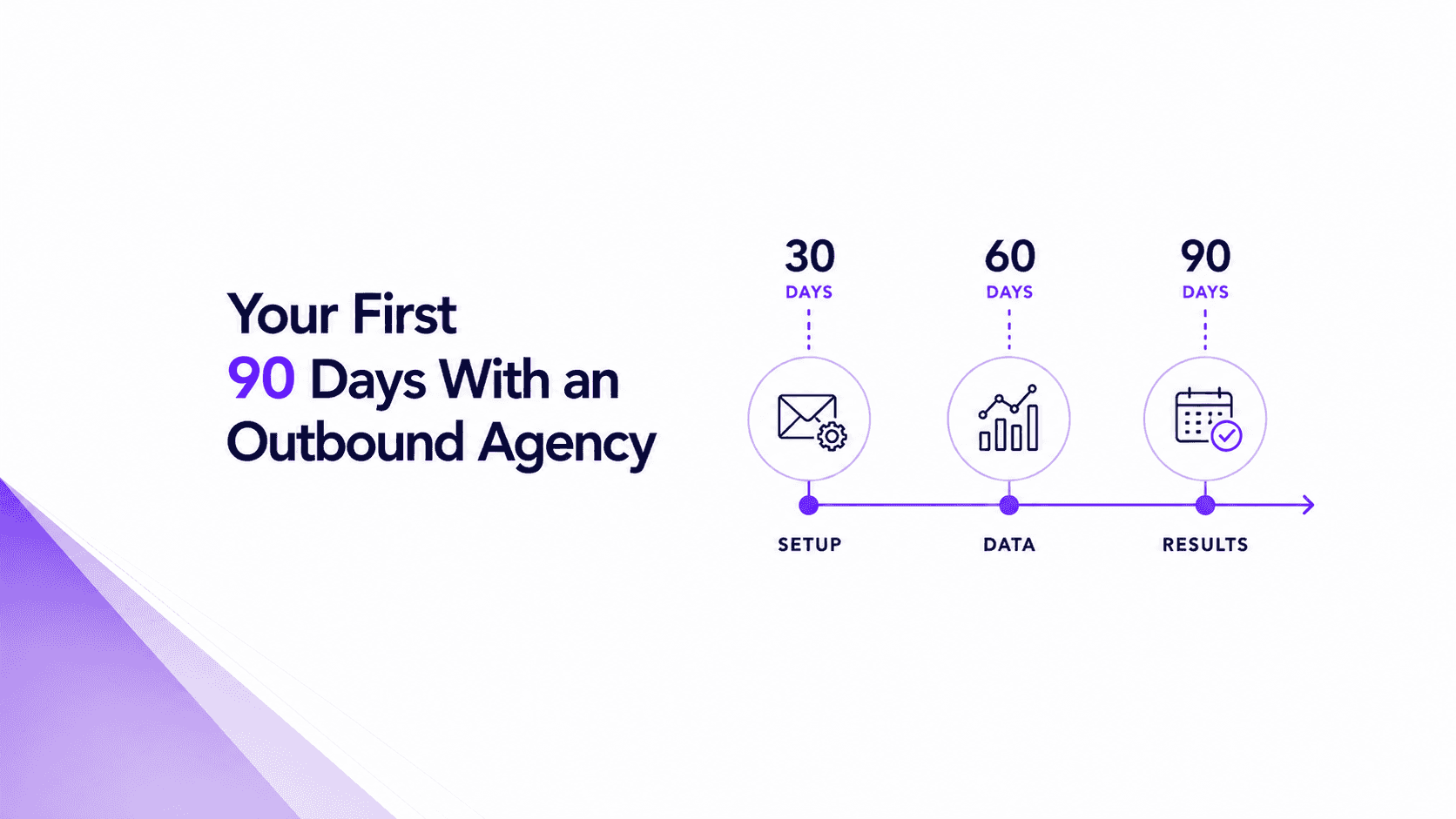
The first 90 days with a B2B outbound agency are where most engagements either build a real foundation or fall apart. Companies sign expecting pipeline within two weeks. Agencies oversell speed to close the deal. The relationship breaks down before a single campaign has had time to work. This guide covers what should happen in each phase, what numbers to track, what red flags look like in practice, and what your team has to do for any of it to work. All of it is grounded in data from OutboundLeads across 3,000+ campaigns, 50+ clients, and $45M+ in pipeline generated.
What Should Happen in the First 30 Days With an Outbound Agency
The first 30 days follow a specific sequence. It starts before a single email is sent.
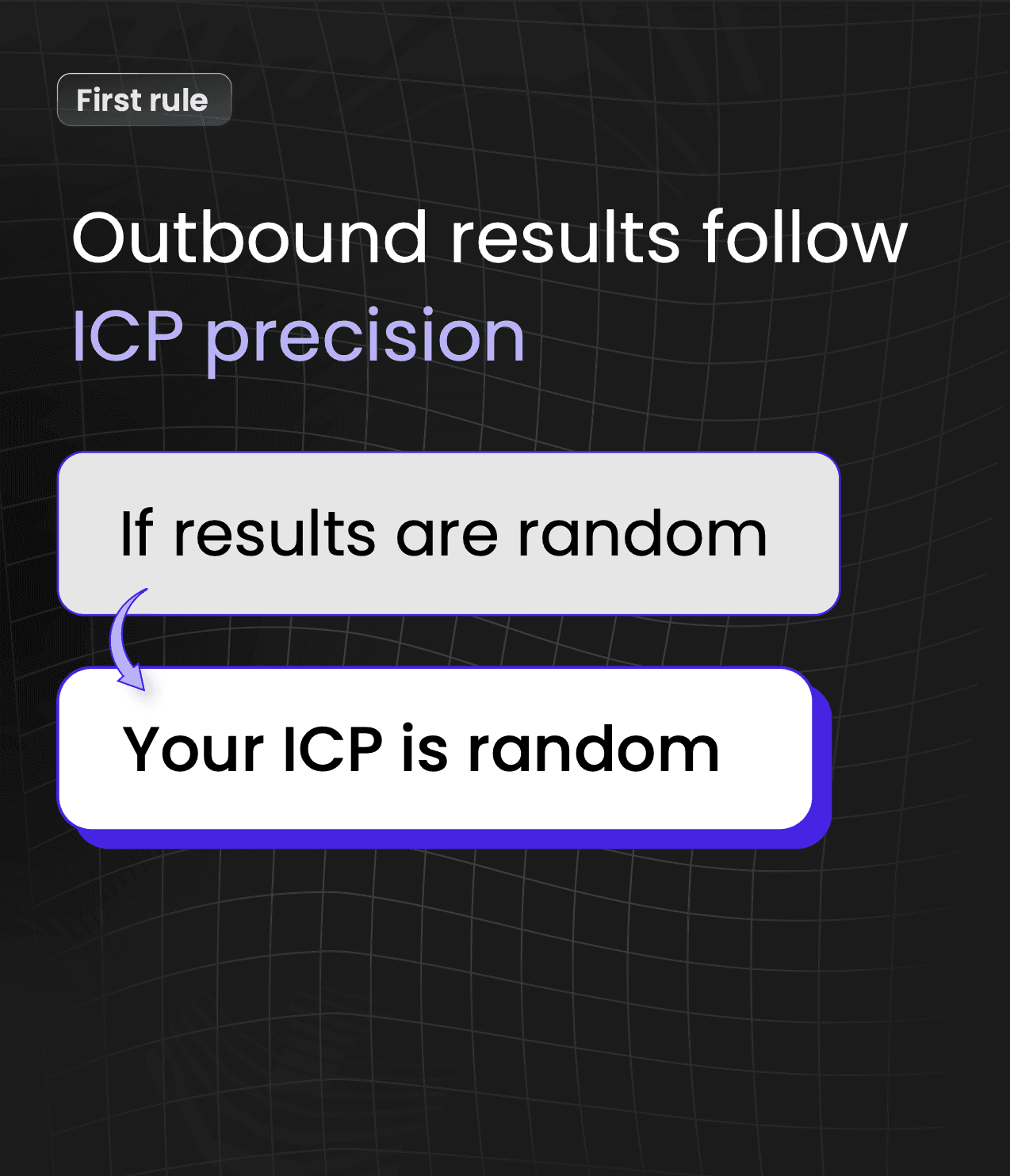
Day 1: ICP Filter
Pick one segment that passes all three criteria: they have an active problem this quarter, the decision maker is reachable and budget exists, and you can cite a relevant result for someone like them. If the segment fails any one of those three, cut it. Starting with a broad or weak segment does not save time. It wastes the entire first campaign cycle.
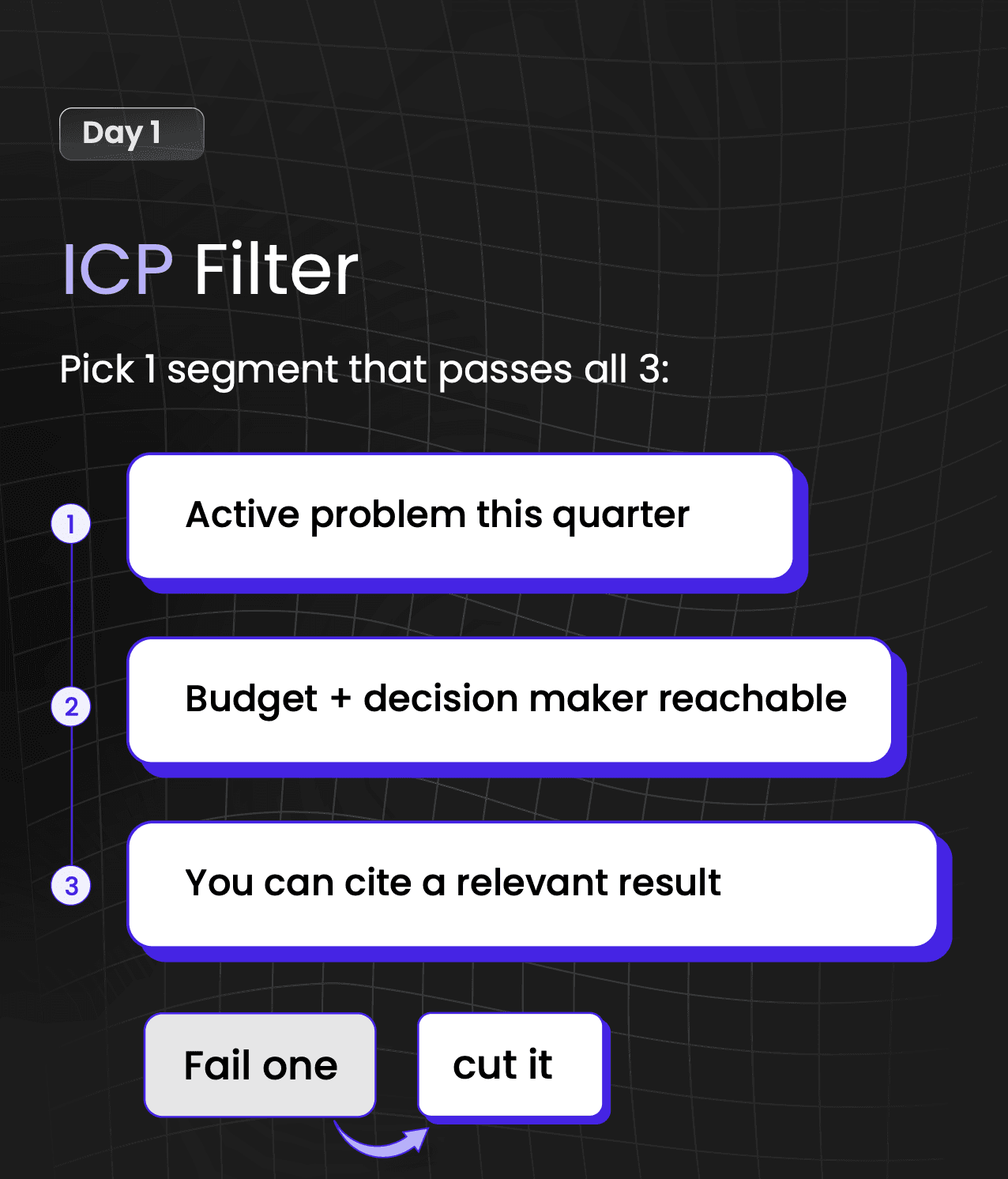
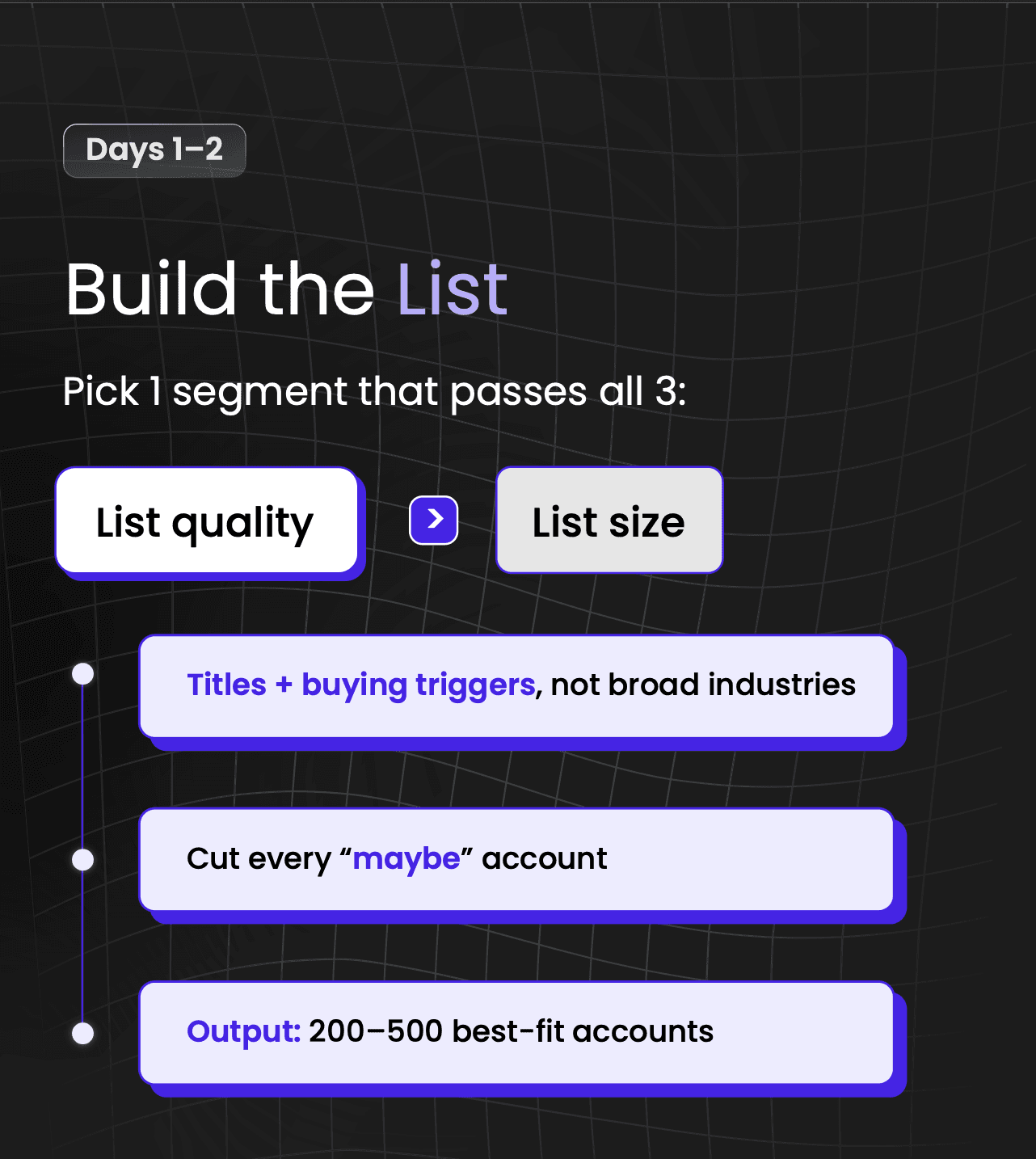
Days 1 to 2: Build the List
Filter by titles and buying triggers, not broad industries. Cut every account that is a maybe. The output should be 200 to 500 best-fit accounts. A smaller, tighter list outperforms a large, loose one every time. List quality determines reply quality. List size determines volume. Get quality right first. OutboundLeads uses Clay and BetterContactfor enrichment and validation before anything is sent.
Day 2: Offer and Angle
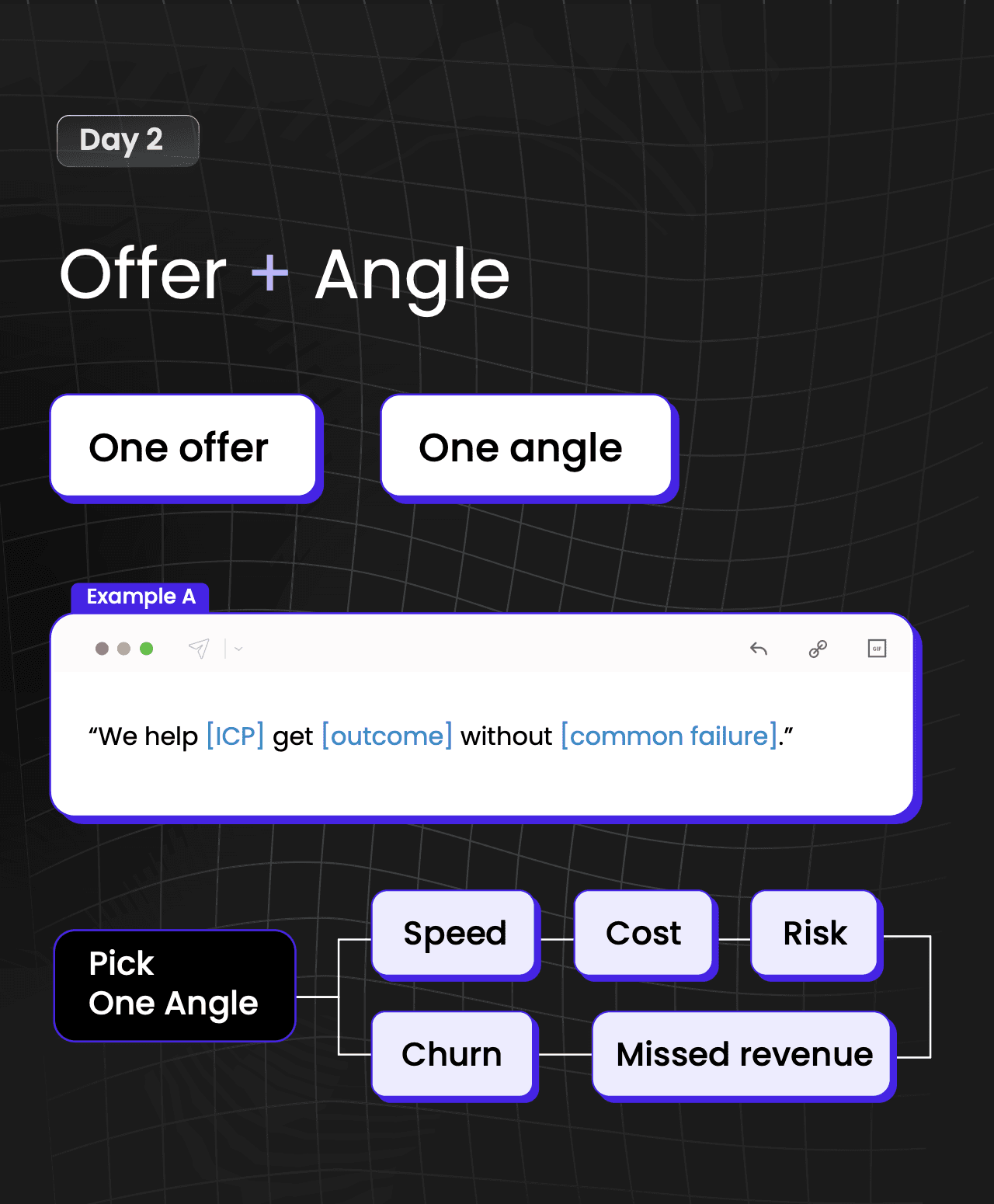
One offer, one angle. The angle frames the pain. Pick one: speed, cost, risk, churn, or missed revenue. Everything in the sequence should be built around that single framing.
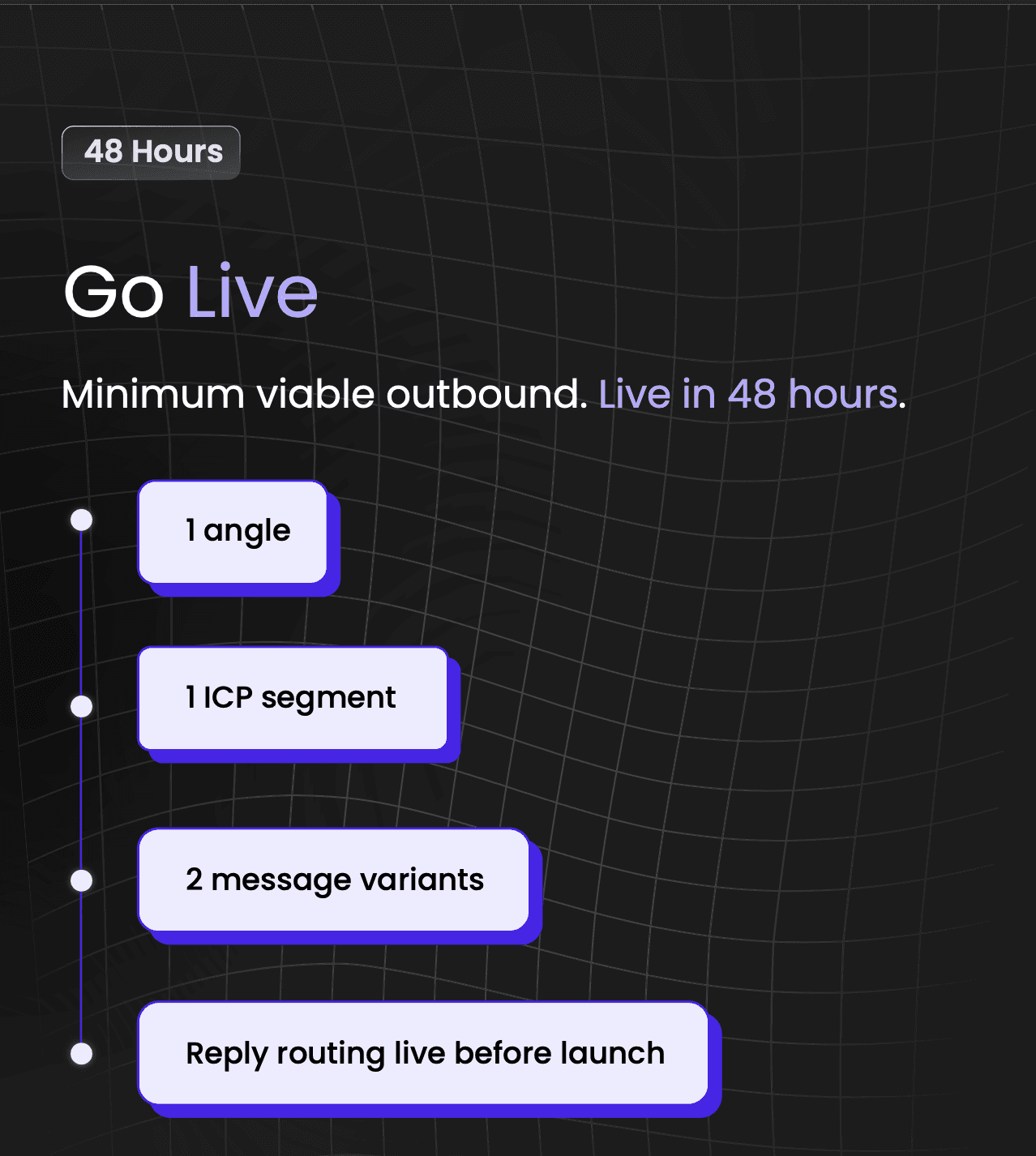
48 Hours: Go Live
Minimum viable outbound. One angle, one ICP segment, two message variants, reply routing live before launch. Not five campaigns. Not a full sequence. Enough to generate real signal without overcomplicating what has not been tested yet. Sequences run through EmailBison, with infrastructure built on genuine Google accounts via Zapmail.
What Should Happen in Days 31 to 60 With an Outbound Agency
The goal in month two is data, not results. Those are different things, and confusing them is how companies pull the plug three weeks before a campaign was about to work.
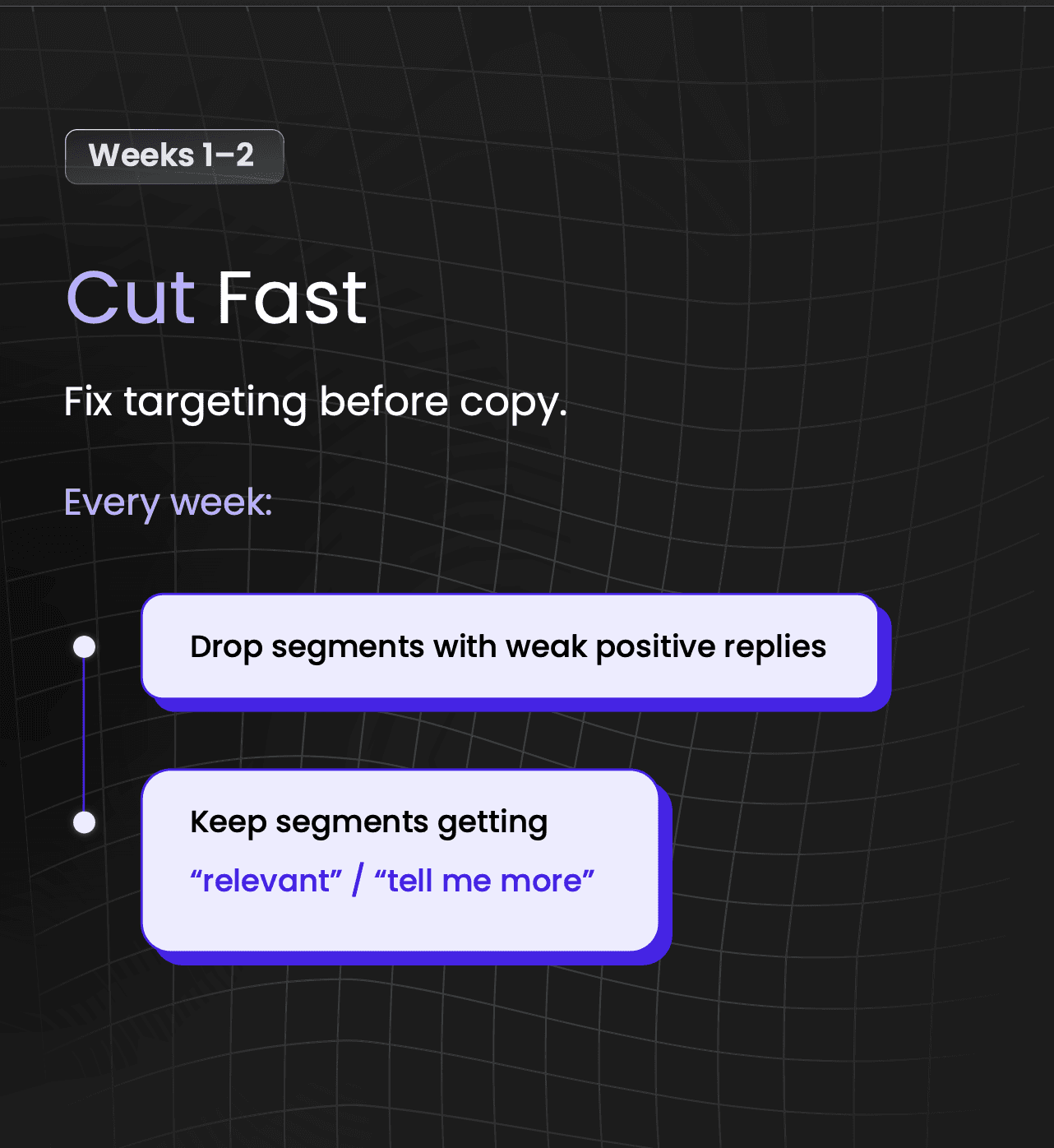
Weeks 1 to 2 of live campaigns: Cut Fast
Fix targeting before copy. Every week, drop segments with weak positive replies and keep segments getting responses like "relevant" or "tell me more." Those two phrases are the signal. They mean the targeting is right even if the message needs work. Cutting fast is not failure. Running a weak segment for another three weeks because you are not sure is.
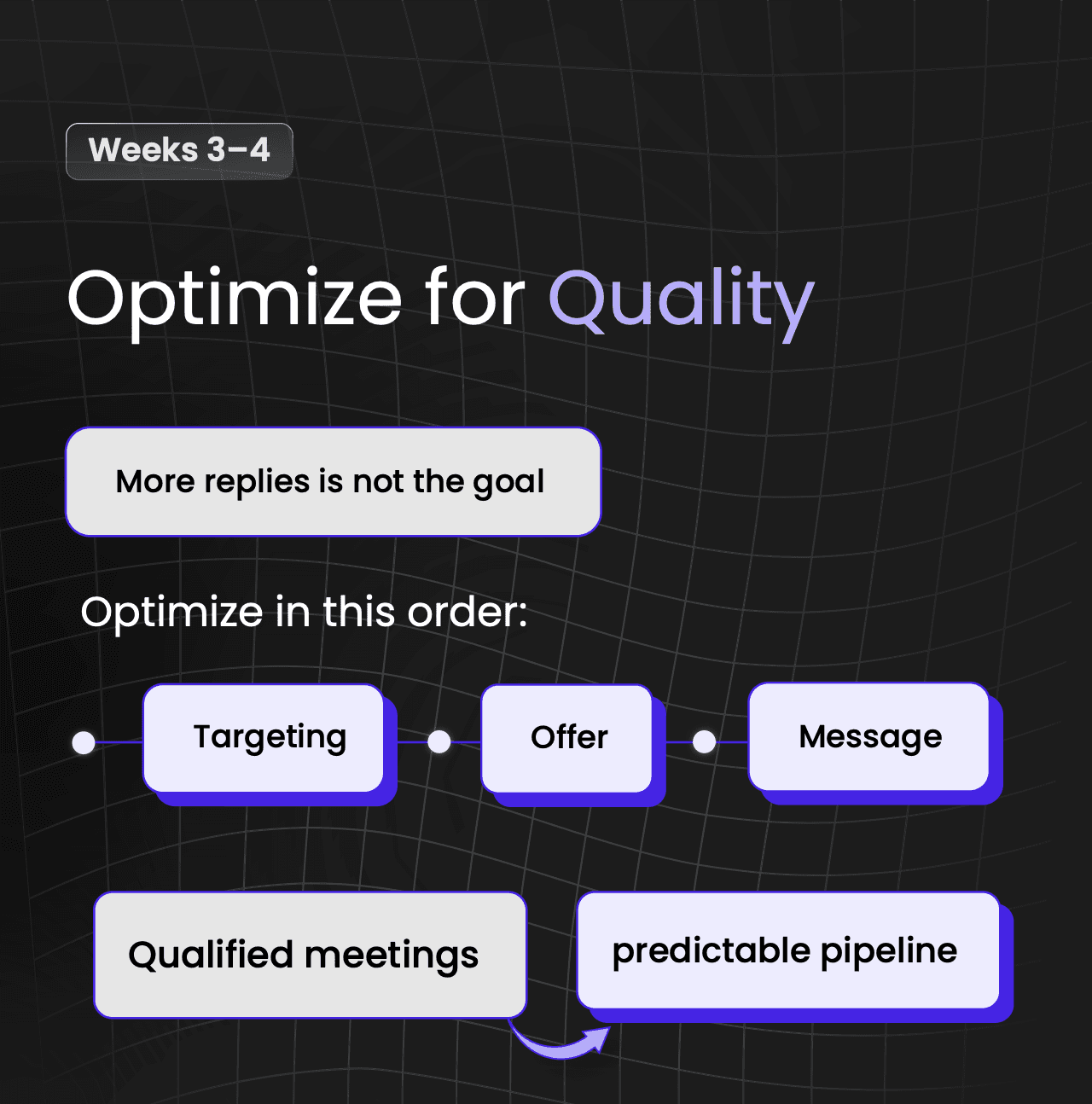
Weeks 3 to 4: Optimize for Quality
More replies is not the goal. Optimize in this order: targeting first, then offer, then message. That sequence matters. Tweaking copy on a campaign with bad targeting produces better-sounding emails that still go nowhere. Get the targeting right, then refine the offer, then sharpen the message. The output is qualified meetings and a predictable pipeline, not a high reply rate.
At least half of all replies to a cold email arrive within the first 24 hours. Given sufficient send volume, a competent agency can make a campaign go or no-go decision within a single day. The benchmark: 30 human responses per 10,000 contacts reached, with at least 6 expressing genuine interest. If reply rate is there but positive replies are not, the targeting or offer is off. If positive replies are there but meetings are not converting, the problem is in the follow-up or response copy. Each has a different fix.
Month two is also when lead magnet performance becomes visible. Flipping the order of two lead magnets between email one and email two once produced a 600 percent increase in meeting bookings. The second offer was resonating more. Moving it forward meant more prospects received the stronger hook first. That optimization is only possible with real send data. For the frameworks behind sequences that convert, see 5 Cold Email Frameworks That Land Meetings and How to Build a Scalable Follow-Up System.
What Should Happen in Days 61 to 90 With an Outbound Agency
Month three is when the loop tightens. You know what is working. The question now is how to compound it.
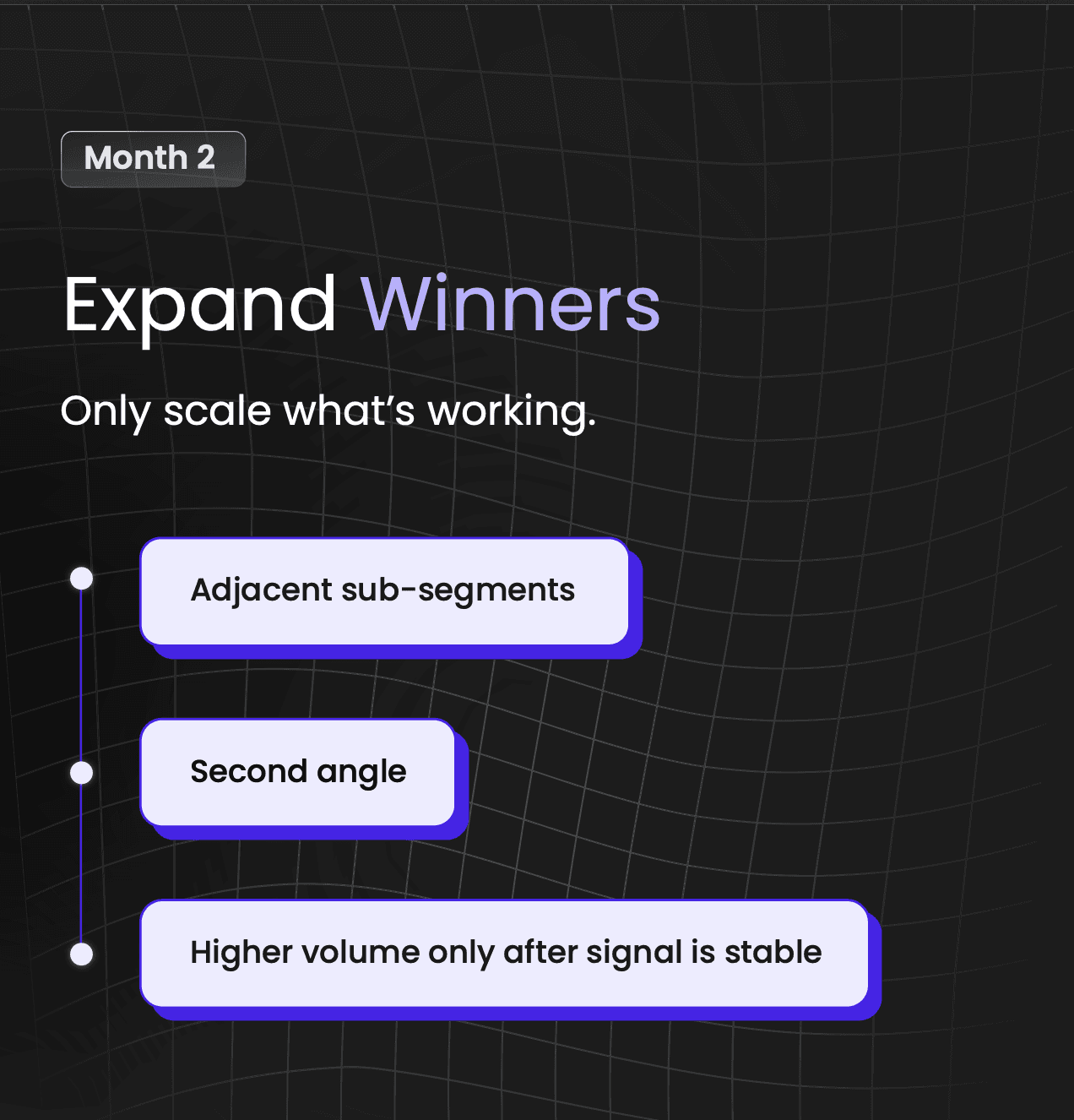
Month 2 into Month 3: Expand Winners
Only scale what is working. Take the segments and angles that produced positive replies and qualified meetings, then expand into adjacent sub-segments and test a second angle. Higher volume only comes after the signal is stable. Scaling a campaign before the signal is stable does not produce more meetings. It produces more noise at higher cost.
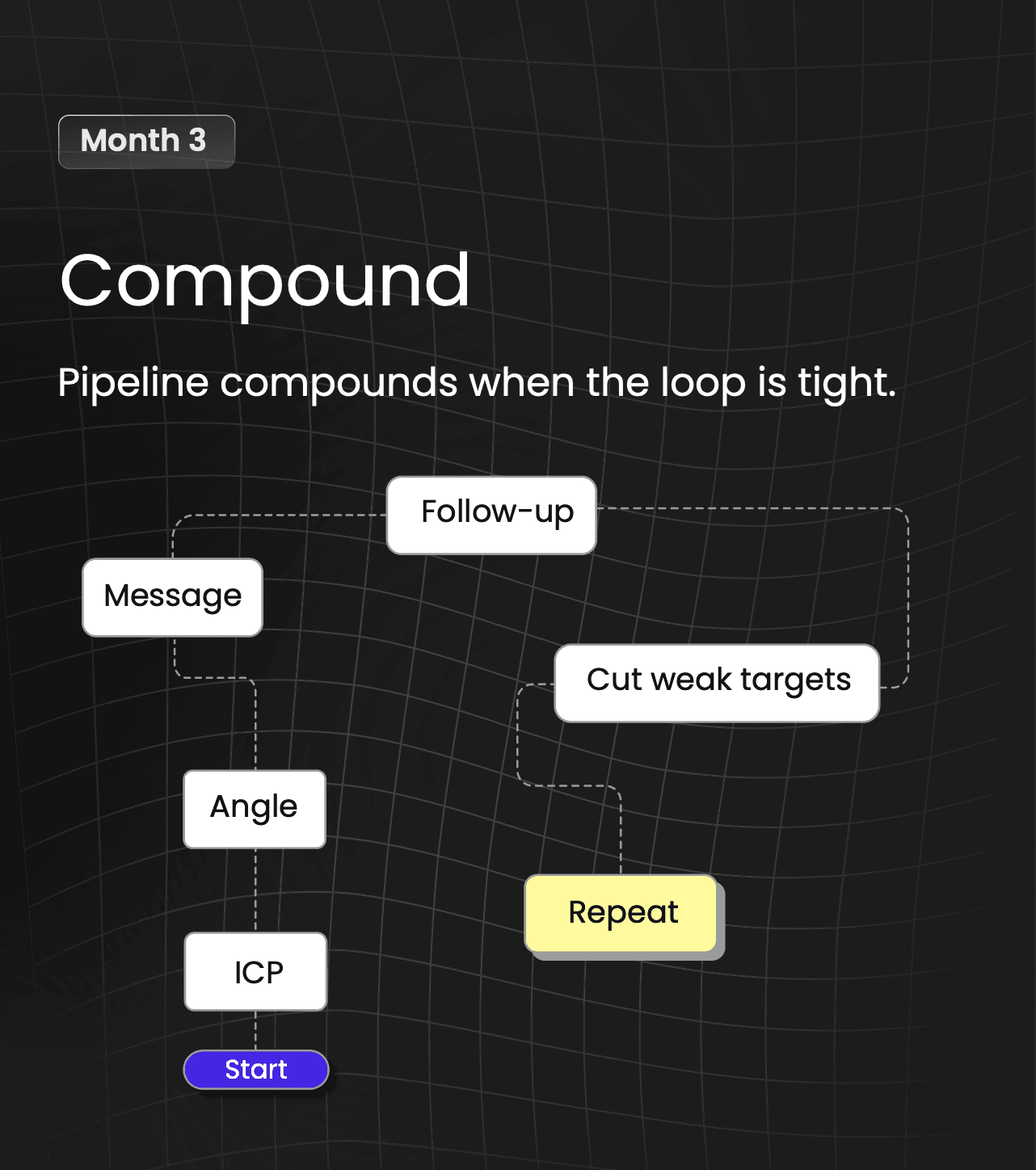
Month 3: Compound
Pipeline compounds when the loop is tight. The loop runs from ICP to angle to message to follow-up, cutting weak targets at each pass and repeating. This is not set and forget. It is a continuous refinement cycle where each pass produces cleaner targeting, sharper messaging, and faster follow-up. By month three a well-run campaign should have a clear top-performing sequence, a defined winning segment, and an optimization rhythm that runs without needing to restart from zero.
Red Flags in the First 30 Days With an Outbound Agency
Any one of these warrants a direct conversation. Multiple of them together warrants reconsidering the engagement.
They are ready to send before infrastructure is warmed. Volume in week one means warmup was skipped or accounts with unknown histories are being used.
No questions about your ICP, offer, or lead magnet before writing copy. If they can write your campaign without understanding your buyer, they are pulling a template.
They promise a specific number of meetings. No one controls enough variables to guarantee exact meeting counts. Guarantees are a setup for a dispute at month three.
They only report reply rate. Reply rate without positive reply rate is a vanity metric. High reply rates with bad targeting generate angry responses that look fine in a dashboard and produce zero pipeline.
Slow communication during onboarding. Response time in week one is a preview of response time in month six.
They blame poor early signals on external factors. A competent agency diagnoses the specific cause and adjusts. A bad one makes the same excuse on every call.
Pricing is significantly below market rate. If market rate is $5,000 to $10,000 per month and they are offering $2,000, something is being cut. Usually tool quality, list validation, or the experience level of whoever is running the campaigns.
Cold Email Benchmarks: What Good Performance Looks Like
One reason bad agencies survive is that their clients do not know what good looks like. These are the benchmarks OutboundLeads tracks internally across 3,000+ campaigns.
Metric | Benchmark | What It Tells You |
|---|---|---|
Bounce rate | Under 3% consistently | Infrastructure and list quality are sound |
Human responses per 10,000 contacts | At least 30 | Minimum signal volume to make campaign decisions |
Positive replies out of total human responses | At least 6 out of 30 (20%) | Offer and targeting are directionally correct |
Positive reply to booked meeting conversion | 1 in 5 minimum | Follow-up sequence and response copy are working |
Emails sent to qualified meeting booked | 1 per 300 emails sent | Scale readiness threshold |
Reply window after first send | At least 50% within 24 hours | Sufficient volume to make kill or continue decisions fast |
Read these together, not in isolation. A 7 percent total reply rate with 90 percent negative responses means the targeting or offer has failed. A 3 percent reply rate where 40 percent are positive is a far stronger signal. Total reply rate without positive reply rate next to it is a vanity metric.
One OutboundLeads campaign converted $30,000 MRR from a list of 2,000 contacts, totaling more than $175,000 in LTV. It worked because it was built around a seasonal insight specific to that industry, sent at exactly the moment those companies were entering their highest-revenue period. Tight targeting and relevant timing produce results that high-volume generic campaigns cannot replicate.
What Your Team Needs to Do for Outbound to Work
Every article on this topic focuses on what the agency does. The companies that see results inside 90 days are not just working with good agencies. They are showing up as good clients.
Come in with a strong offer and lead magnet. A great product with a weak lead magnet loses to a mediocre product with a compelling offer, every time. OutboundLeads has worked with clients whose products outperformed their competitors but whose lead magnets were too weak to convert. After rebuilding those lead magnets through competitor research, ICP and GTM analysis, and testing three to five variants, signups increased by 5x. The offer is not the agency's variable alone.
Know your ICP before you start. The agency will help refine it, but show up with a working hypothesis. "We target mid-market SaaS companies" is not an ICP. "We target VP of Sales at SaaS companies between $5M and $50M ARR running outbound with three to five reps who are struggling with reply rates" is. The same product targeting sales leaders and marketing leaders requires two different campaigns. The pain driving the purchase is different. You cannot copy a winning campaign across departments and expect it to hold.
Move fast on approvals. When a lead replies with interest, the window is now. Interest fades. Someone ready today may have moved on in two weeks. Every day of delay on approvals or follow-up responses is pipeline left on the table.
Do not micromanage every campaign decision. There is a difference between staying informed (weekly calls, reviewing reporting, asking smart questions) and micromanaging (approving every email individually, second-guessing every targeting call). Clients who give their agency room to run get better results.
Push for new angles, not just results. The best question a client can ask is: what have we not tried yet? Buyer behavior changes, messaging fatigue sets in, competitors launch new offers. Clients who treat outbound as a living system get results that build. The ones who wait for the agency to bring all the ideas plateau.
Does Cold Outbound Still Work?
Yes. But the bar for doing it successfully has skyrocketed.
The market is flooded with low-effort agencies running generic templates, skipping critical technical infrastructure, and treating outbound as a raw volume game. Inbox providers have responded with aggressive security filters, and buyers have responded with deep skepticism.
All of that filters out low-effort execution and rewards agencies that build campaigns around tight ICP targeting, strong offers, and properly warmed infrastructure. OutboundLeads has been on the right side of that filter for two years. The proof is in the infrastructure decisions made before most clients were paying attention to them.
The companies getting results from outbound in 2026 are treating it as a long-term acquisition channel with a proper foundation, not a quick-win experiment. When the foundation is right, the channel works. The data from 3,000+ campaigns confirms it.
Bad execution is not the same as outbound not working. If your campaigns are running and your pipeline is not moving, there is a specific reason. One conversation is usually enough to find it.